


[ Transcript edited for clarity, flow and length]
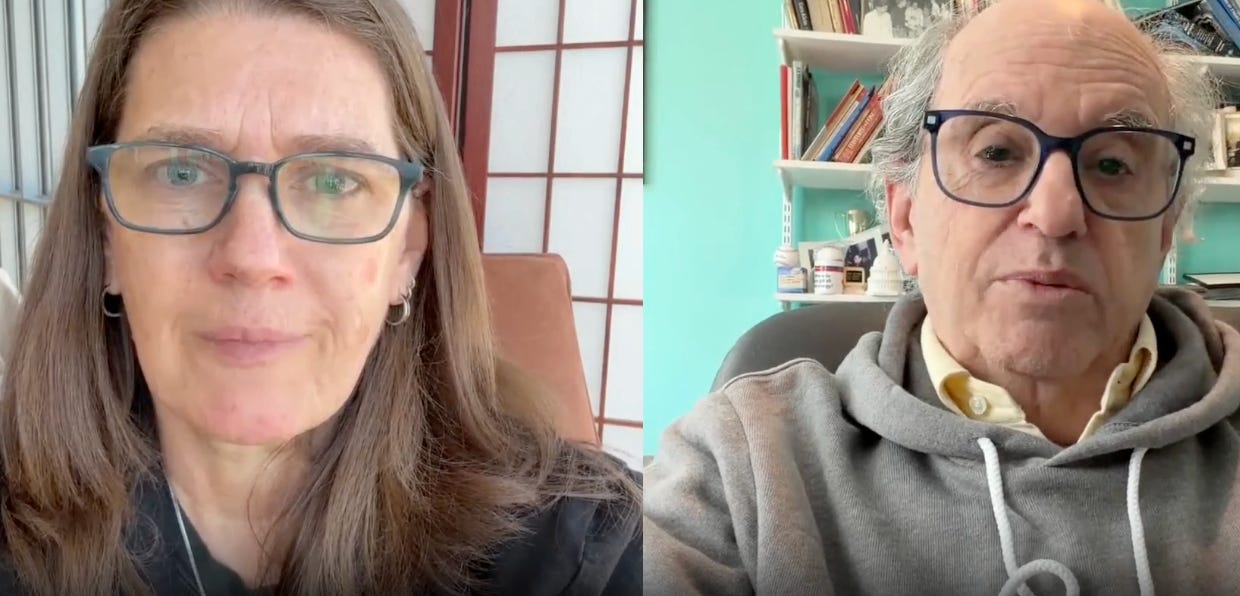
Mary Trump: Norm, thanks for being here. As I mentioned, I wanted to talk about your Atlantic piece from January 2016, The Eight Causes of Trumpism, and where we are now compared to where we were, what feels like several geological epochs ago. But first, we have to address the fact that we do not have weekends anymore. Once again, over the weekend, something happened that turned all eyes to Donald, and somehow an alleged attempted mass shooting was used to justify building a four hundred million dollar ballroom. What are your thoughts?
Norm Ornstein: I have many thoughts. One is that there are a lot of unanswered questions. This individual was not shot. He was captured without any wounds. He was reportedly carrying a long gun, a handgun, and multiple knives, and he ran through a magnetometer. We saw images of Secret Service agents with guns drawn while he was sprinting away before he fell and was captured, yet no one fired. That is unusual.
We also had one officer struck in a bulletproof vest. I would like to see the ballistics on that bullet. If I had to guess, it may have been friendly fire. Under those circumstances, Secret Service agents are trained to shoot to kill, so it is difficult to understand what happened.
There is also a larger issue. I have been working for years on continuity of government planning. Reports indicate that the president, vice president, and much of the cabinet were all in that ballroom. The only person in the line of succession not present was the president pro tempore of the Senate. That creates a dangerous scenario. If a catastrophic event occurred, the country could be left in a very precarious position. The Presidential Succession Act dates to 1947 and is clearly outdated.
Beyond that, I stopped attending this dinner about twenty years ago because it had become a farce. It is a gathering of three thousand people, many of whom treat it as the highlight of their lives. It has turned into a spectacle of celebrity culture. There is only one ballroom in Washington that can seat that many people, which is why it is used.
Now, the idea that this incident justifies building a White House ballroom is absurd. A smaller ballroom would not even accommodate this event, and it would be inappropriate to hold a private dinner of this kind in an official government space.
The dinner itself is problematic. The White House press corps, with very few exceptions, has lost integrity. This event celebrates a president who has called them the enemy of the people. Media organizations invited members of this administration, including individuals who represent the worst elements of it. That alone is troubling.
Mary Trump: Not quite yet, because there is more. CBS had fifteen tables, and some of the worst figures were seated there. What exactly was being celebrated? The press has spent over a decade being attacked, labeled fake news, and treated as enemies, yet they continue to participate in this spectacle.
There was also an interview where Donald felt the need to say that he is not a rapist or a pedophile, even though the question had nothing to do with him. That kind of response is revealing.
Norm Ornstein: When I saw that statement, I thought of Richard Nixon saying he was not a crook. It carries the same implication. And in Donald’s case, there are legal findings that make such statements even more questionable.
Mary Trump: Exactly. A jury has already made a determination. And yet we are in a situation where we cannot trust the information we are given. If officials claim the alleged gunman had certain motives, I do not believe them. We saw this before. There were no clear reports, no transparency, and conflicting narratives.
Even basic details do not align. The timeline, the security response, the descriptions of proximity, none of it makes sense. This creates a dangerous environment where people cannot distinguish truth from fabrication.
Norm Ornstein: There are legitimate questions about the Secret Service. In a previous incident, the response did not follow protocol either. Instead of protecting the president by minimizing exposure, there were actions that contradicted standard procedures.
In this case, it is also important to recognize that the ballroom itself is heavily secured. It is extremely difficult to breach. Any claim of immediate danger inside that space appears overstated.
There is also a financial dimension. A contractor recently received a large no bid contract for work that had previously been estimated at a fraction of the cost. That raises concerns about corruption and the possibility of kickbacks tied to the proposed ballroom project.
Mary Trump: Which brings us to your article. You outlined the causes of Trumpism before it fully took hold. Many of those figures are no longer central, but their influence remains. The infrastructure they built is still in place. Did you anticipate how severe things would become?
Norm Ornstein: I wrote that piece before Donald secured the nomination because I believed the conditions were already there. Many analysts thought he would fade, but I saw deeper forces at work. The tribalism that developed over time, the influence of figures like Newt Gingrich, and movements like the Tea Party all contributed.
The election of Barack Obama played a role as well. It did not eliminate racism. It triggered a backlash. I recall saying on election night that we would see more overt racism, not less, because some people would use that moment to claim that racism no longer existed.
Even so, I did not expect it to reach this level. His first term was damaging, but it was not the full catastrophe we are seeing now. Many voters in 2024 underestimated what a second term would bring.
The key difference is that there are no longer constraints. In his first term, there were individuals who resisted extreme actions. Those people are gone. They have been replaced by loyalists. The Supreme Court has also shifted in ways that expand executive power.
As a result, we are seeing actions that would have been unthinkable before. Policies are being implemented without regard for norms, laws, or consequences.
Mary Trump: We have moved from proposals that were once shocking to actions that are even more extreme, and there is little resistance within the system. The mechanisms of accountability have weakened significantly.
Norm Ornstein: And it is likely to get worse. I am particularly concerned about the integrity of future elections. There are multiple ways the process could be undermined. Ballots could be challenged or seized. Mail delivery could be manipulated. Voting access could be restricted. Intimidation at polling places is a real possibility.
In more extreme scenarios, emergency powers could be used to disrupt or delay elections. These concerns are based on patterns we have already seen.
Even if elections proceed and there is a shift in control, there are risks during the transition period. Significant changes could be made that have long lasting effects, particularly in the judiciary.
Mary Trump: That is why it is so important to face reality. We cannot assume that normal processes will protect us. We have already seen a breakdown in peaceful transitions of power.
Norm Ornstein: That is correct. However, there is a potential shift underway. Donald’s support is declining. The situation in Iran could accelerate that trend. Rising costs and instability are affecting his base.
If the conflict escalates further, especially if it requires additional troops or a draft, that could become a breaking point for some supporters.
Mary Trump: It may take that level of impact for people to reconsider. Many voters respond to immediate personal consequences.
Norm Ornstein: Even then, the path forward will be difficult. Rebuilding institutions, restoring norms, and regaining public trust will take time. But if there is a shift in congressional control, it could create an opportunity to begin addressing the most serious issues.
Mary Trump: It is not just about recovery. It is about doing things properly going forward. Educating people about the importance of institutions, the rule of law, and basic human decency.
Norm Ornstein: Exactly. It will be a long and difficult process, but there is still a path forward. The key is whether enough people are willing to recognize the stakes and act.
Mary Trump: Norm, thank you. This is a difficult conversation, but it is a necessary one. And for everyone watching, this is not a reason to disengage. It is a reason to stay engaged and informed.

Accountability is critical. The need to be proactive is paramount!
We have to have massive numbers of people voting in the midterms. Massive.