

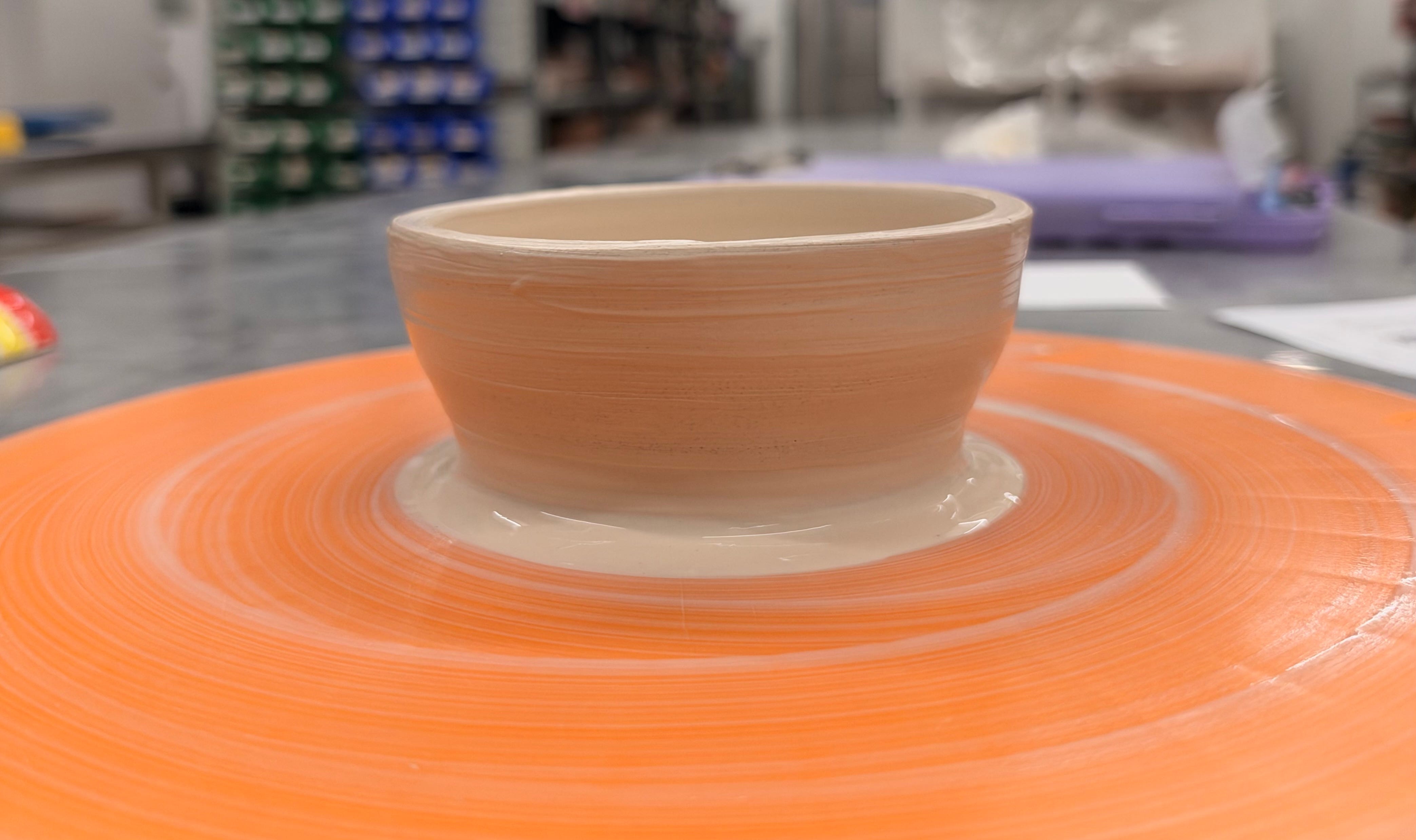
There’s a pottery term called “centering.” It’s the first thing you need to do with the clay before you can start shaping it. Simply put, centering is making sure, through a combination of leverage, momentum, and proper hand placement, that your clay is evenly placed in the middle of the wheel.
I threw my first pot while visiting Somerset, England. When my friend Rosie told me she had a pottery studio, I told her throwing pots was something I’d always wanted to do, so early on the day we were scheduled to take the train back to London, she taught me the basics. Making a pot on a wheel was exactly what I’d hoped it would be—tactile in a soothing way, physical, and very meditative.
As soon as we got back to New York, I signed up for a pottery class at a studio in Chelsea. It took me a few tries to get my first completed pot (see the picture above), but one thing I got right almost immediately was the centering. The trick, I think, is understanding you have to force the clay to get it where you want. That’s one of the unexpected things about pottery—it requires strength and the willingness to be unafraid to use it. That’s a line that can be crossed, of course, but that’s another fascinating thing about the craft: It involves a great deal of instinct—intuiting where and when to apply pressure, when to pull back, how to gauge when the pot is too thick or getting too thin. All of that is a matter of being attuned to the process through repetition and massive amounts of practice.
I find it ironic that the fundamental task of centering comes so easily to me when, at the moment, I am feeling utterly uncentered. As my friend Joyce Vance wrote the other day:
. . . the first Trump administration, though shocking, proceeded at a slower pace. Usually, there was just one major scandal a day, not 12. We’ve now reached such a point of overwhelm that it’s hard to keep track of everything, and so much disappears from memory.
And that’s part of the problem: even if we lose track of—and “forget”—some of the horrors, their impact remains and the trauma is cumulative. Staying centered is a challenge, to say the least.
We’re over a decade into this dark period and, as Joyce points out, the scandals (and the attendant stress and anxiety) aren’t just accumulating, they’re escalating exponentially. Despite all of this, however, it’s critical for us to maintain our equilibrium and, yes, if possible, find our place of Zen. I’m very optimistic about the outcomes of the mid-terms—I believe the Democrats will take the House by a large margin and regain control of the Senate by a narrow one—but I’m quite anxious about the Trump regime’s potential election day violence and the disinformation, machinations, and legal maneuverings they’re going to subject us to over the next couple of months. Riding all of this out is going to mean we will all need our leverage, momentum, and strength to stay centered.
I’ll be voting in person on Tuesday. I live in New York City, so I don’t have to worry about ID restrictions (there are no ID requirements) and there aren’t usually massive wait times. Also, there’s something about voting the day of the election I find deeply satisfying.
Since I’ll likely be working late as the results start coming in at 8:00 p.m. ET, I plan to take a break in the middle of the day. After I vote, Ronda and I are having lunch with a friend, and then for a couple of hours I’m going to the pottery studio with my daughter to throw pots, get centered, and find that place of Zen we are all going to need in great abundance in the coming days.
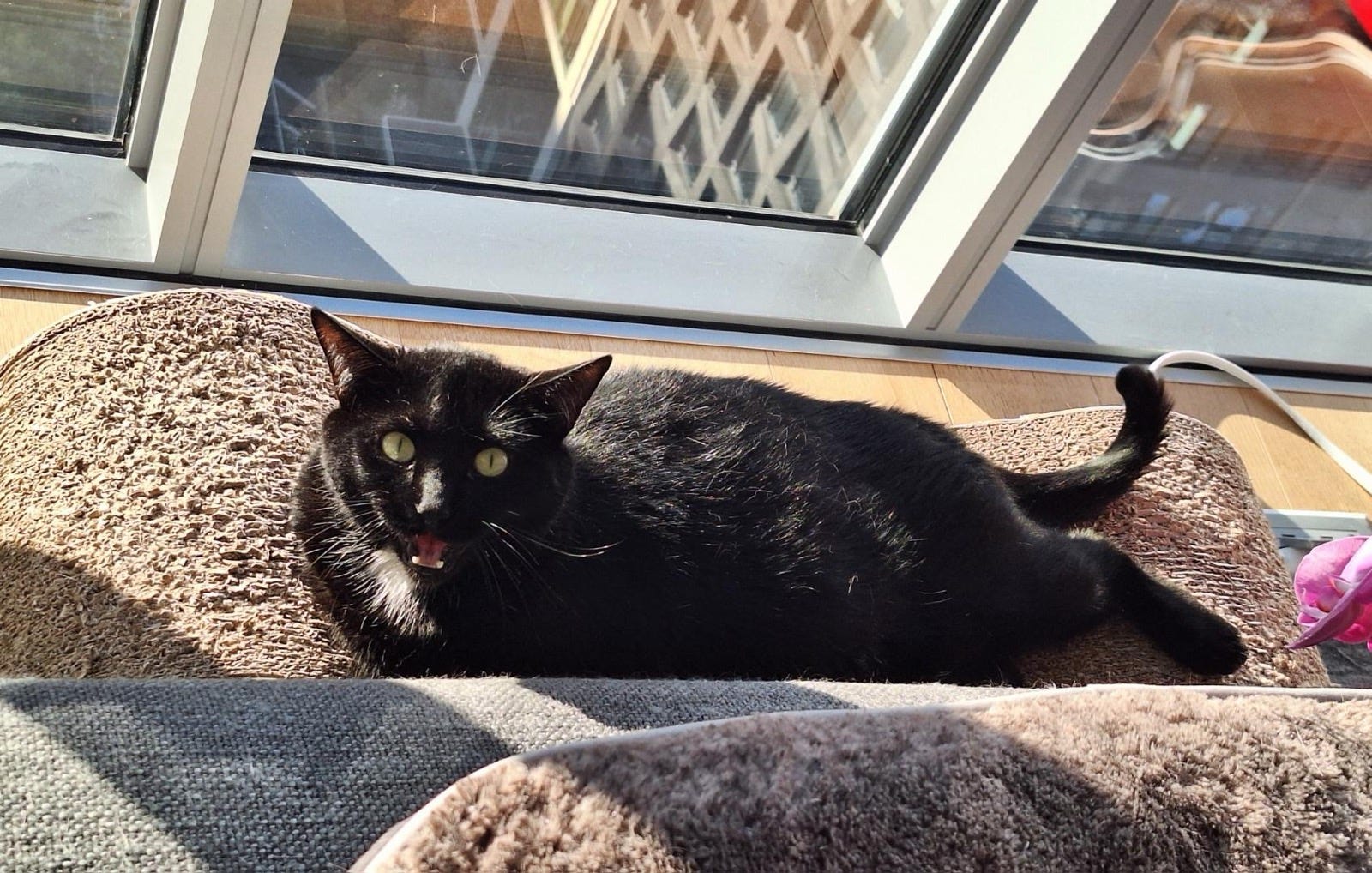
Cap, for one, is ready:

I can't vote on Election Day anymore. I'm too nervous about some random thing happening that will stop me from voting. Even in a Blue State I want to get my vote in early. But at least you'll be voting early (before lunch you mentioned!). Appreciate all you do.
Coolest of Beans, Mary!
May we ALL find our Center...
and hold it close.