

I think of summer with its luminous fruit,
blossoms rounding to berries, leaves,
handfuls of grain.
Maybe what cold is, is the time
we measure the love we have always had, secretly,
for our own bones, the hard knife-edged love
for the warm river of the I, beyond all else; maybe
that is what it means the beauty
of the blue shark cruising toward the tumbling seals.
In the season of snow,
in the immeasurable cold,
we grow cruel but honest; we keep
ourselves alive,
if we can, taking one after another
the necessary bodies of others, the many
crushed red flowers.
—Mary Oliver, “Cold”
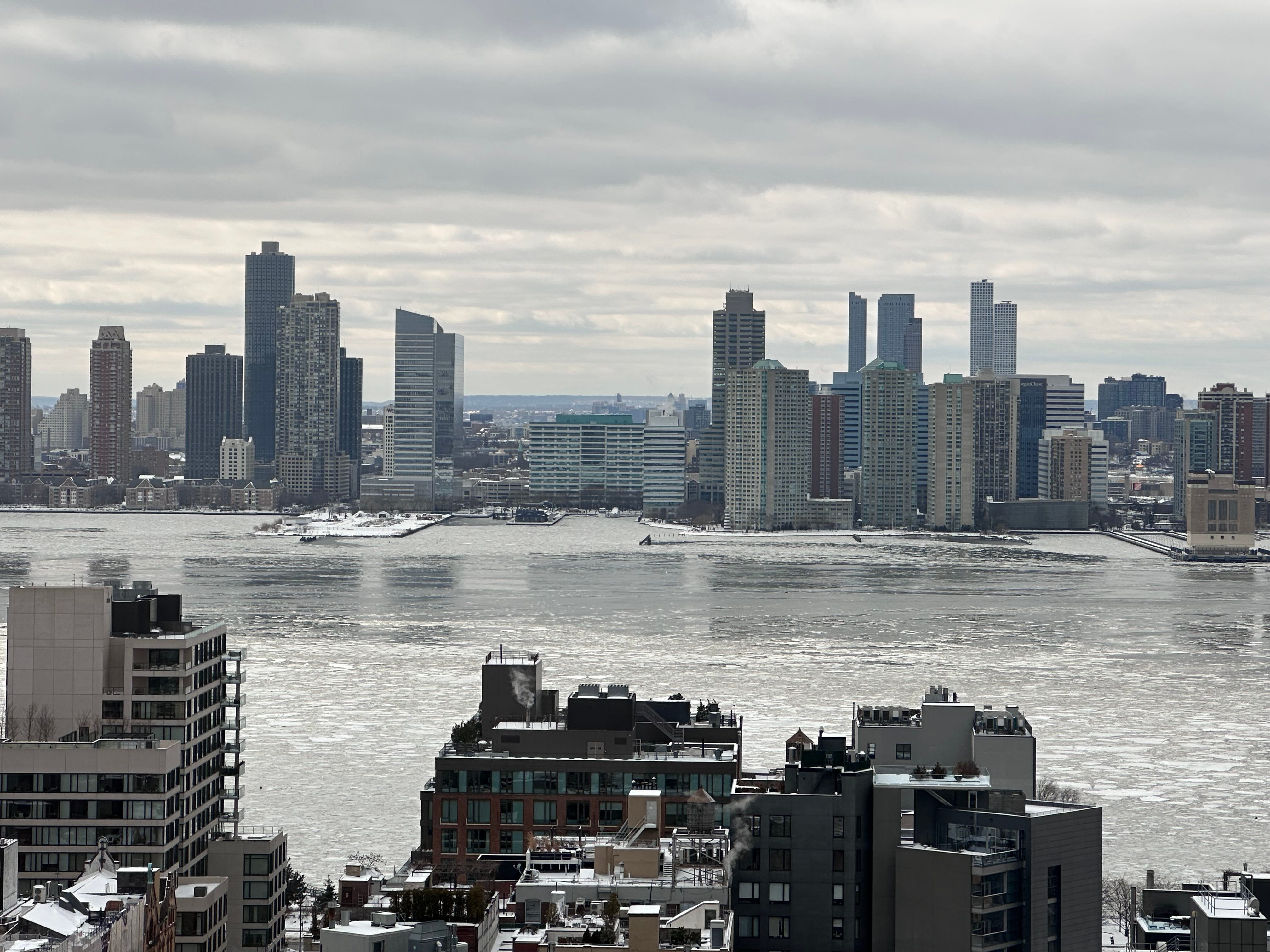
For the last few years, I’ve been bemoaning the fact that we don’t really have winter in New York anymore, at least not the kind of winter I grew up with. We used to have four seasons and lately it’s felt that we have only three.
Despite the fact that I don’t particularly like being cold and I’m not really interested in winter sports, I’ve missed the days when snow was almost always on the ground and the temperature rarely rose above freezing. Snowfall is beautiful; it brings a quiet to this unquiet city. And if there’s enough accumulation, it’s as if we’ve been given permission to turn away from the world for a while, to hibernate.
We’re more than making it up for it now. The snowfall was lovely and I’m glad that the snow has stuck around, but the “tree-splitting cold,” as Mary Oliver described it in this poem, has stuck around, too. For almost ten days now, the temperatures have been in the teens and the wind chill, thanks to sustained winds over 15 miles an hour coming in off the river, has made it feel like it’s below zero.
This is not the kind of weather that invites outdoor exploration and I’ve found myself longing for summer. I want to be outside, unencumbered by hats and gloves and the insulated jacket I bought for my trip to Iceland a couple of winters ago.
I’ve found myself thinking about our trip to Florence last summer, my first time back to the city in over almost thirty years. As soon as we got off the train from Milano, I felt like I was home. We stayed at a hotel next to the Arno River and could hear the rush of water flowing through the sluice as the full moon rose above the opposite bank.
It was a brief trip, but we spent two whole days walking the city and revisiting my favorite sites—especially the art of my favorite Italian Renaissance painter, a Florentine, Domenico Ghirlandaio. And that’s what I’ve been thinking about while New York is in the grip of this Arctic freeze, my emergency art.
What follows is an excerpt of a piece I wrote back in 2022.
The summer before I started grad school at Columbia I traveled, first to England and Scotland. After spending a few days in my grandmother’s birthplace on the Isle of Lewis in the Outer Hebrides, I flew to Pisa and then took the train to Firenze. With the exception of a weekend in Verona I’d never been to Italy before. I didn’t know anybody and had no idea where I was going to stay.
Once I left the train station I went in search of a cheap hotel. On the way I passed the Basilica of Santa Maria Novella, for which the train station is named, and decided to go in, suitcase in hand, looking very much like an American tourist, which is usually something I try to avoid.
I walked through the nave in total awe of the sweeping arches, Masaccio’s Holy Trinity, and the stained glass windows, some by Filippino Lippi. I then continued on to the Cappella Tornabuoni and the fresco cycles created by Domenico Ghirlandaio in the late 15th century.
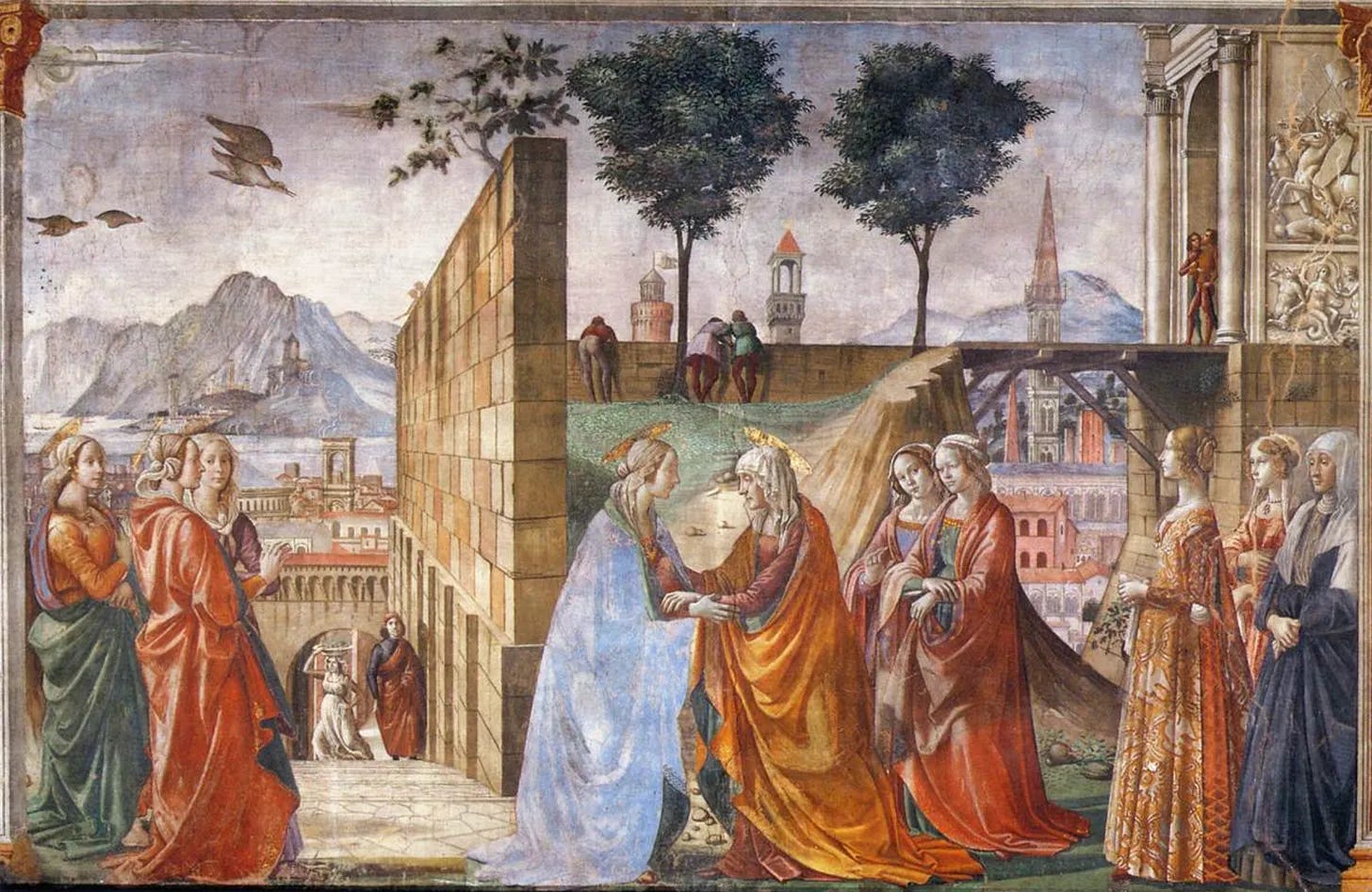
These freschi depict the Life of the Virgin and the Life of St John the Baptist. Floodlights positioned to illuminate every inch of the paintings remained lit as long as you kept feeding them 500 lira pieces. I have no idea how many times I went back to Santa Maria Novella that summer. Sometimes I went to see the stained glass windows or the Cloisters, sometimes for the paintings of Giotto and Masaccio, but I always stopped at the Cappella Tornabuoni, my pockets stuffed with as many lira coins as I could afford (and, whenever possible, taking advantage of the light provided by other people’s money).
Ghirlandaio’s contemporaries considered him to be one of the best painters of his time. From his formal — almost austere —portraits to his remarkable attention to details and his use of color, there is no other painter of his generation who comes close to matching him. Part of his appeal, though, is his intimate knowledge of Florentine society; he often included portraits of his fellow citizens—and self-portraits—in his paintings.
Not far from Santa Maria Novella (although nothing is really very far away from anything else on that side of the Arno) is the small Church of the Ognissanti. Perched on a side-street adjacent to the Piazza di Ognissanti, in view of the Arno, it’s worth visiting for the paintings of Giotto and Botticelli alone, but it’s Ghirlandaio’s fresco of The Last Supper that’s the real reason to go.
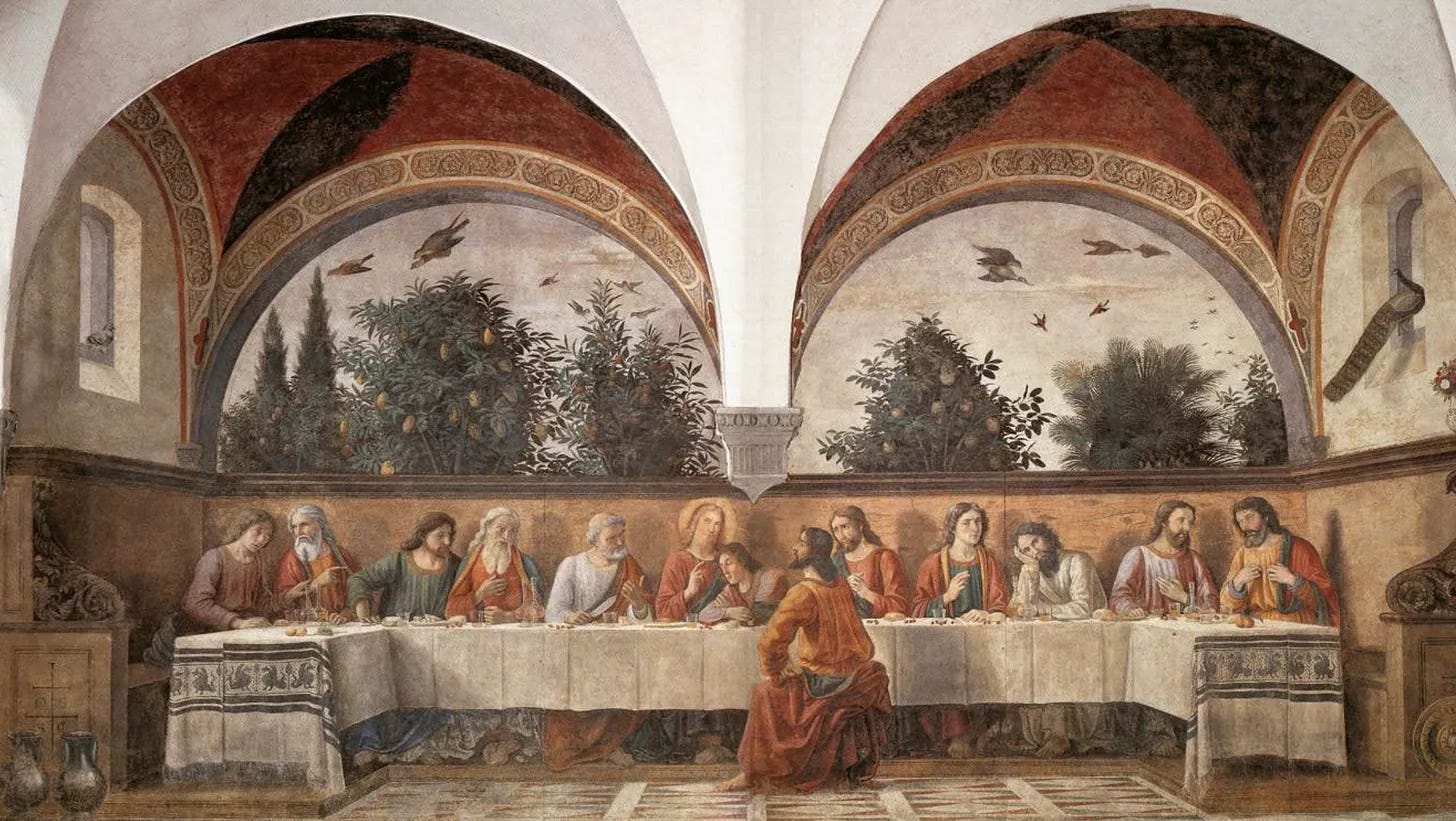
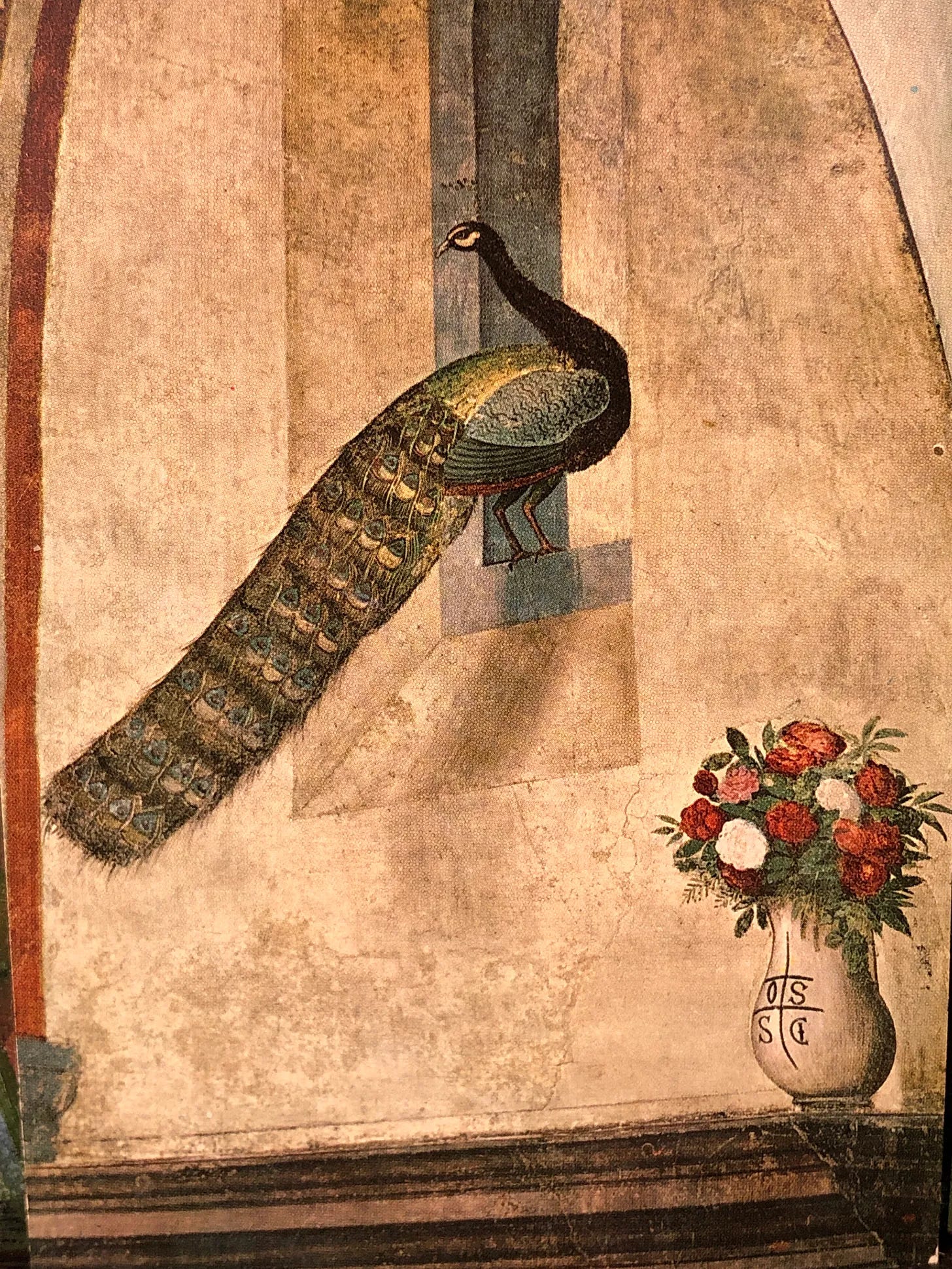
Ghirlandaio painted a very similar fresco at the Basilica di San Marco where I ate lunch in the Cloister almost every day after picking up food at a nearby open-air market. But I prefer the Last Supper in the Ognissanti. The colors are more muted, but the setting is naturalistic and more intimate. Then, of course, there’s the peacock.
Perhaps, as Oliver wrote in “Cold Poem,”
“Maybe what cold is, is the time / we measure the love we have always had, secretly, / for our own bones, the hard knife-edged love / for the warm river of the I, beyond all else."
Perhaps this is the time to take our measure of the “hard knife-edged love for the warm river of the I.” We still have a long winter ahead, and a long, hard knife-edged fight to prepare for. Let’s find warmth in knowing it is the good fight and we are on the right side of it.

Going from watching Bad Bunny to looking at paintings of Ghirlandaio…it’s a pretty good Sunday night.
Lovely, Mary. I just sent to a friend who is wintering inside too. Soon the ICE will melt. In other ways too! Stay warm as you can, and thank you for the art and poetry and contemplation.